Why Do Philadelphia Rowhomes Get So Many Mice? (Explained)
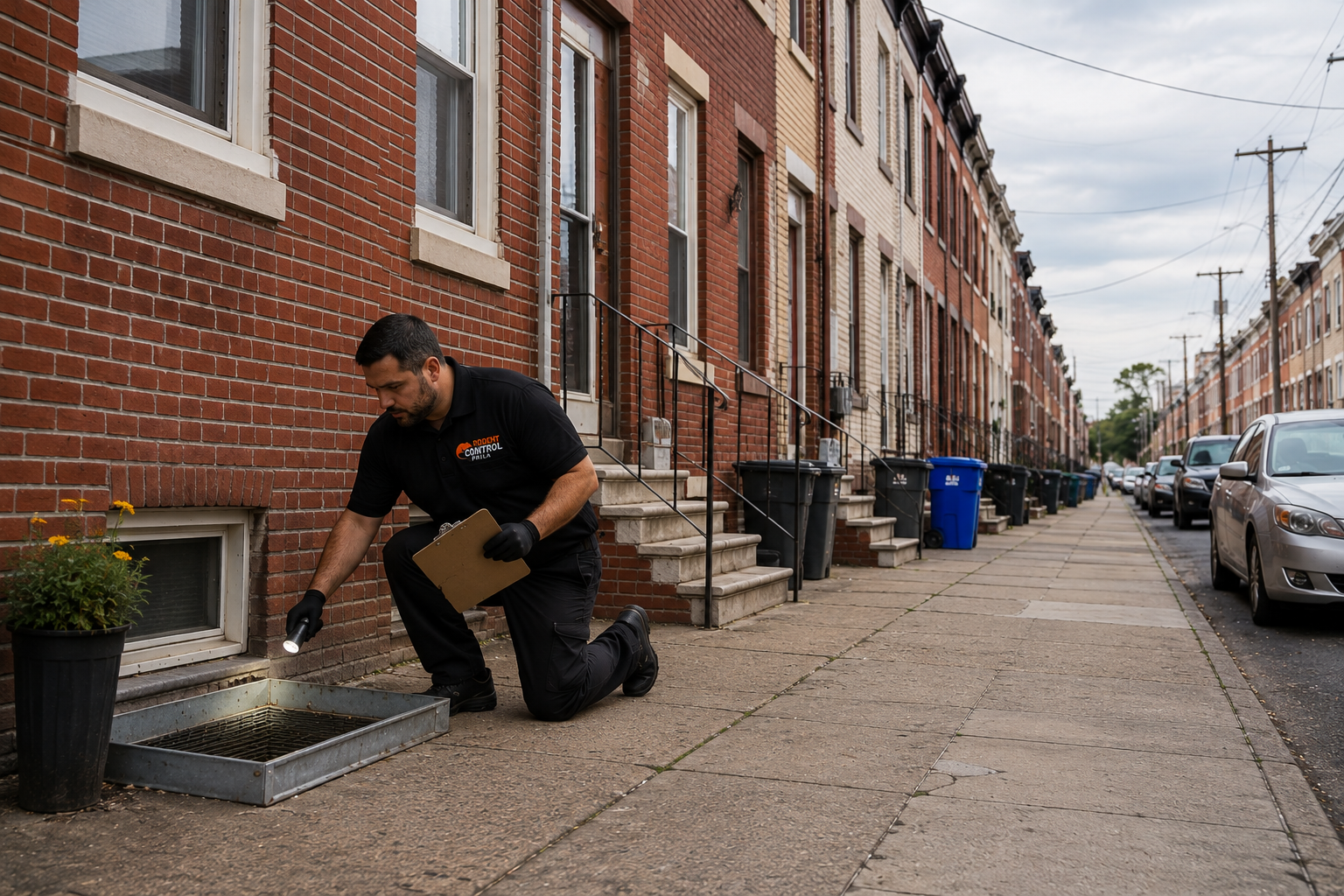
Philadelphia rowhomes get mice at high rates for four connected reasons: shared party walls let mice travel between units without going outside, old mortar and pipe penetrations leave dozens of small entry gaps, rear alleys concentrate food waste that supports large local mouse populations, and treatment on a single unit rarely holds because the source is often the block, not the house. Fixing a rowhome mouse problem long-term requires both interior work and sealing the routes into shared walls.
Almost every long-time Philadelphia rowhome owner has dealt with mice at least once, and many have dealt with the same problem repeatedly. That pattern is not bad luck. It comes from how Philly's housing stock was actually built, how the blocks work behind the houses, and how mouse populations move across shared walls. Once you understand the four drivers below, the reason DIY rowhome treatment often fails becomes obvious.
The four reasons rowhomes get repeat mice problems
-
1
Shared party walls let mice cross between units
Most Philadelphia rowhomes share a wall with the units on either side. Gaps at the top plate, bottom plate, or around shared plumbing chases let mice pass from your neighbor's wall cavity into yours without ever going outside. A single infested unit on a block can quietly seed several neighboring units over months.
-
2
Old mortar and pipe penetrations leave dozens of small gaps
Rowhomes built between 1880 and 1930 (which is most of them) used masonry, cast iron, and lath-and-plaster construction. A century of settling, plumbing replacements, and utility upgrades has opened small gaps around water lines, gas lines, drain stacks, HVAC ducts, and old chimney flues. Mice need less than a quarter inch to enter.
-
3
Rear alleys concentrate food waste
Philadelphia's rowhome blocks were built with narrow shared alleys behind the houses, and modern trash collection put the bins in exactly those alleys. That creates a continuous food supply for mice and rats along the back of every block, and the population supported by that food supply is what feeds the pressure on individual homes.
-
4
Treatment on one unit rarely holds because the source is the block
If your unit is treated but the shared wall, the alley, or the neighbor's kitchen still has mice, new mice reach you within weeks through the same routes. Effective rowhome treatment addresses the travel path, not just the mice currently inside your walls.
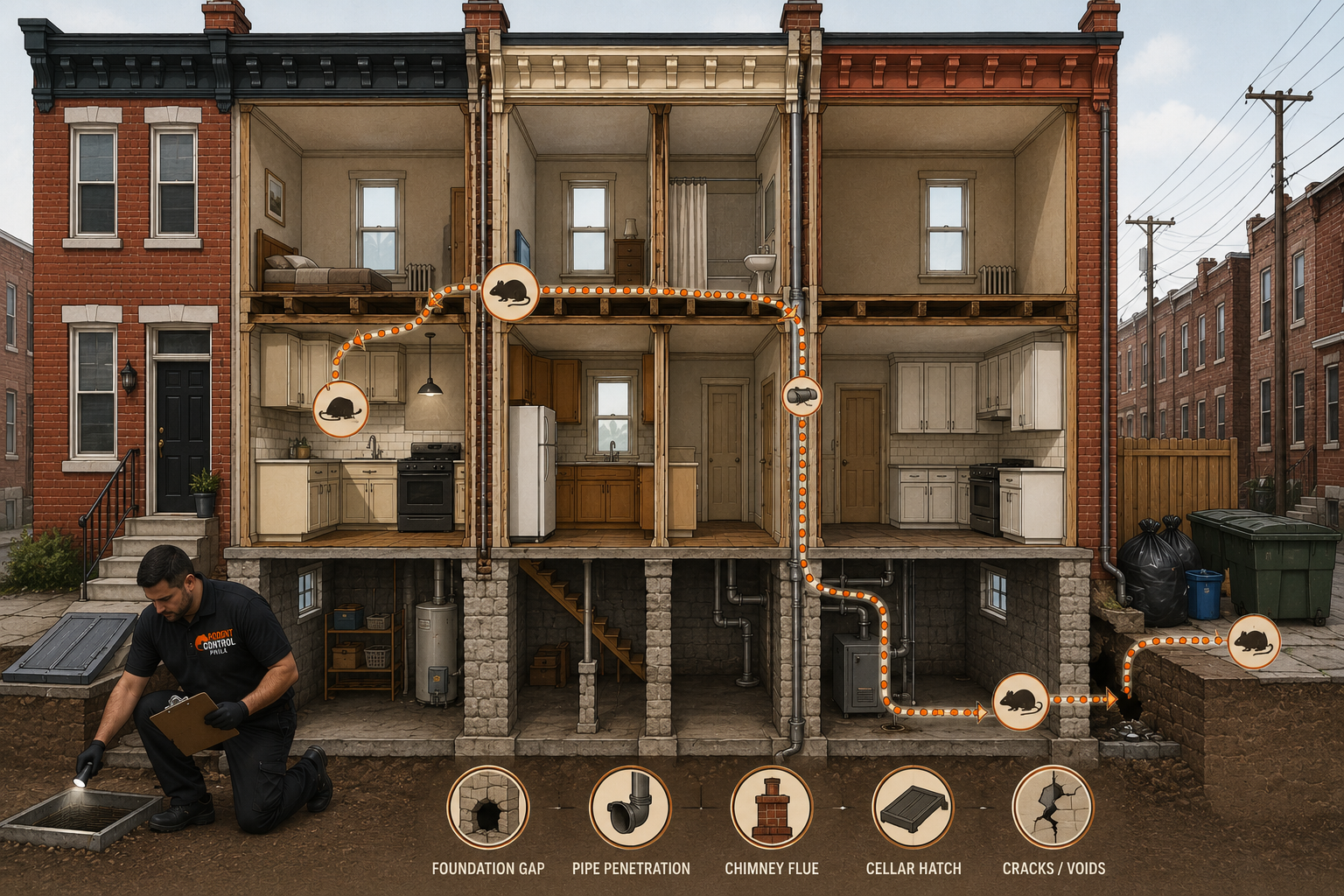
Where mice actually enter a rowhome
The Philadelphia rowhome entry points we find most often:
- Gaps around water and gas line penetrations in the basement
- Cracked mortar between the party wall and the neighboring rowhome
- Rear alley doors, cellar hatches, and coal chutes with worn seals
- Unsealed dryer vents and HVAC penetrations on the back wall
- Sidewalk vault covers and pavement lights on the front pavement
- Roofline gaps where an addition meets the original rowhome roof
- Old chimney flues that were closed off cosmetically but not sealed
Why the neighbor effect matters more than most people think
Mice do not respect property lines. In a Philadelphia rowhome block, an active infestation two doors down can support a small breeding population that travels along the shared walls, feeds in a rear alley, and reaches every unit on the block over time. This is why homeowners who treat only their own unit often see mice come back within two or three months, while homeowners who treat their unit and seal the party wall and alley entry points see the problem stay closed. Our full breakdown of mice in the walls covers this pattern in more detail for South Philly specifically, and the same rules apply across Fishtown, Kensington, Point Breeze, and every other rowhome neighborhood.
Why DIY rarely holds in a rowhome
Snap traps in a kitchen catch the mice actively feeding there, but do nothing about the mice still nesting in the party wall or the food source in the alley. Steel wool and expanding foam close the gaps you can see, but not the ones inside a wall cavity or behind an appliance. Rodenticide inside a rowhome wall creates a serious odor problem and does not stop new mice from arriving through the same route. Our full comparison of DIY vs professional rodent control lays out exactly where DIY breaks down in Philly rowhomes.
What actually fixes a rowhome mouse problem
The rodent control process that holds in Philadelphia rowhomes runs in four parts: a full inspection that includes the basement, party wall accessible points, and rear alley entry points; targeted trapping placed on the actual mouse travel path rather than in the middle of a room; sealing every accessible entry point with materials mice cannot chew (galvanized mesh, mortar, sheet metal), including party wall penetrations where feasible; and a follow-up visit to confirm no new activity before the job closes. For persistent block-level problems, coordinating treatment between two or three adjacent units gives the strongest long-term result.
Repeat mice problem in your rowhome?
Free inspection, flat quote, and a plan that includes party wall and alley entry points.
Call (267) 501-1576 Or request your free rodent inspection onlineFrequently asked questions
Why do mice keep coming back to my Philadelphia rowhome even after treatment?+
Almost always because the treatment addressed the mice inside your unit but not the entry points from the shared party wall, the rear alley, or a neighboring unit. In a rowhome, new mice reach you through the same routes within weeks unless those routes are sealed.
Can mice really travel between rowhomes through the wall?+
Yes. Party walls typically have small gaps at the top plate, bottom plate, and around shared plumbing chases. Mice pass through these gaps freely and can reach every unit on a block over time without ever going outside.
Is my neighbor's mouse problem going to become my mouse problem?+
If nothing is done to seal the shared wall, usually yes. Rowhome mice reliably spread between connected units. If a neighbor has an active infestation, sealing your side of the party wall is the single most effective preventive step you can take.
Are older Philadelphia rowhomes worse for mice than newer ones?+
Yes. Pre-1930 rowhomes have more small entry gaps from settling, plumbing changes, and old lath-and-plaster construction. Newer or gut-renovated rowhomes are better sealed but still share walls, so they are not immune. Renovation next door often pushes mice into surrounding units temporarily.
Does the block's alley trash really affect my house?+
Yes. Rear alley food waste supports the local mouse population that then pressures every home on the block. Individual homeowners cannot control alley conditions alone, but sealing rear entry points on your unit closes the route that population uses to get in.
This guide describes why Philadelphia rowhomes are particularly prone to repeat mouse problems and what actually resolves them. Every property is different. Call (267) 501-1576 for a free inspection and a specific plan for your address.