Mice in the Walls? Here's What It Means for South Philly Rowhomes
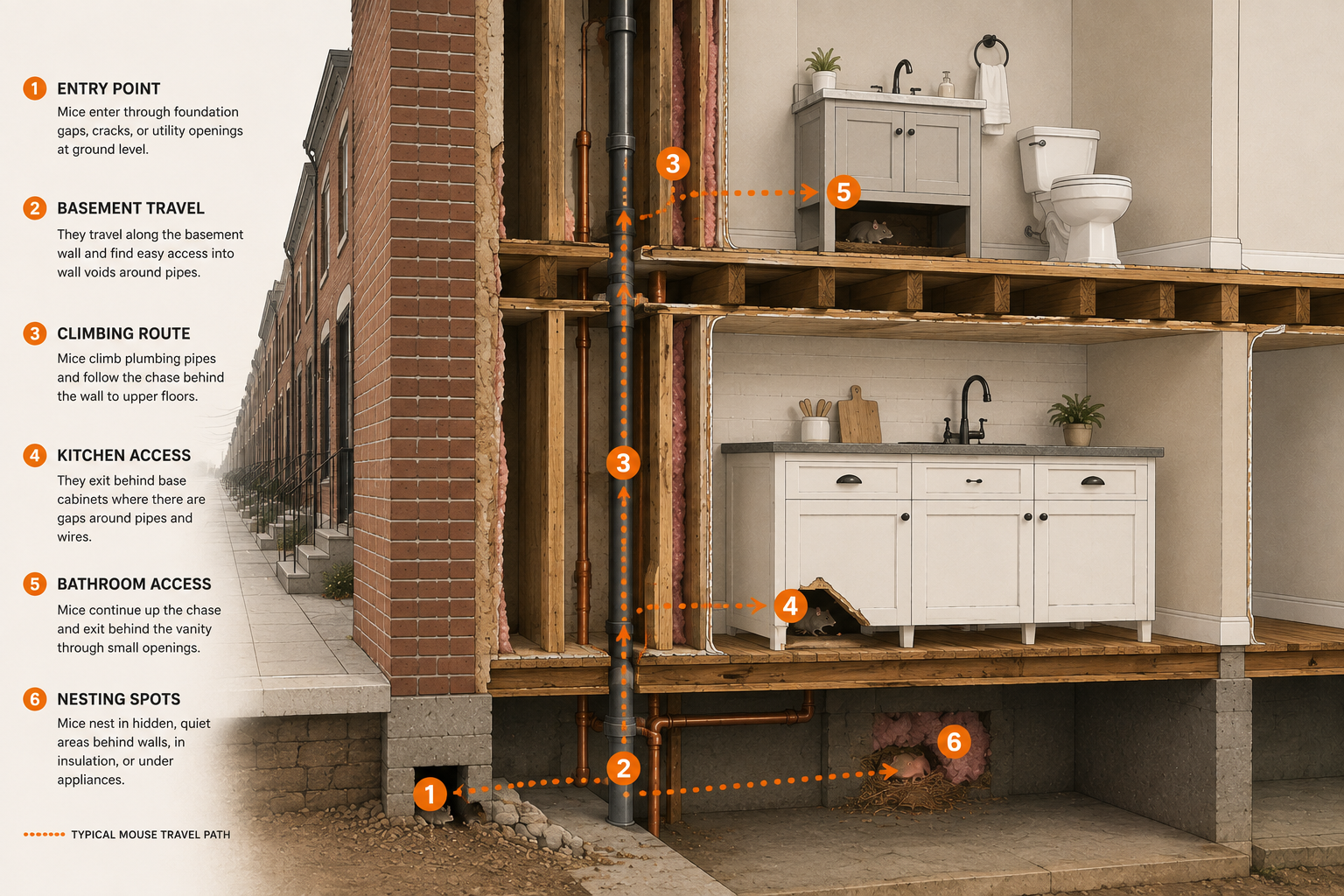
Scratching at night in a South Philly rowhome wall almost always means mice, not rats or squirrels. Mice are nesting inside the wall cavity, usually near a plumbing chase or the shared party wall with your neighbor, and traveling between floors through the same vertical gaps. Traps set inside the room will not reach them; the fix is to find the entry point they used, seal it, and trap along their travel path.
South Philly rowhomes were built to share heat, plumbing, and structure with the units next door. That same construction gives mice easy vertical highways between floors and horizontal ones between neighbors. Once you hear scratching or scurrying inside a wall, the population is already established, and the treatment has to match the geometry of the building, not just the room you can see.
What scratching at night actually means
Mice are nocturnal, so activity inside walls is loudest between about 9 PM and 4 AM. What you hear is usually a light, quick scratching or scurrying sound, sometimes with brief pauses, moving up, down, or sideways along the inside of the wall. That movement pattern is diagnostic. A steady scratching in one spot for long stretches is more likely nesting behavior, while fast bursts of movement mean mice traveling between a nest and a food source, often the kitchen or pantry on a different floor.
Why South Philly rowhomes get wall mice specifically
Three features of typical South Philly housing stock combine to create ideal conditions for wall mice. First, the party wall. Most South Philly rowhomes share a wall with the neighbors on both sides, and gaps in the mortar or at the top and bottom of that wall let mice cross between properties without ever going outside. Second, the vertical plumbing chase. Kitchens and bathrooms are commonly stacked floor over floor, so a single chase runs the full height of the house, and mice use it as an interior stairwell. Third, older lath-and-plaster construction on the upper floors leaves small cavities behind baseboards, around outlet boxes, and where the wall meets the ceiling, giving mice quiet, insulated places to nest.
Where mice usually nest inside a South Philly wall
The wall cavities we most often find nests in are:
- Behind lower kitchen cabinets, next to the plumbing wall
- Inside the party wall on the second floor, near where it meets the ceiling
- Behind bathroom vanities where drain pipes penetrate the wall
- In the space above a drop ceiling or soffit in a finished basement
- Behind the wall of a stairwell, especially at the landing
- Around unsealed penetrations for HVAC ducts or old gas lines
Is it mice, rats, or squirrels?
Not every scratching noise inside a wall is mice. The timing and character of the sound narrows it down quickly.
| What you hear | Time of day | Most likely animal |
|---|---|---|
| Light, quick scratching | Night (9 PM to 4 AM) | Mice |
| Heavier scurrying or gnawing | Night, sometimes very early morning | Rats |
| Loud scampering or thumping | Dawn and dusk, daylight hours | Squirrels |
| Fluttering or chirping | Dawn and dusk | Birds or bats |
If the noise is inside a wall in a South Philly rowhome and clearly nocturnal, mice are the safe first assumption. If you are still unsure whether you are dealing with mice or rats, our mice control and rat control service pages walk through the treatment differences.
Why DIY traps in the room do not solve wall mice
The single most common mistake with wall mice is placing snap traps out in the middle of the kitchen or bedroom floor. The mice are inside the wall. They come out briefly to feed and go back, using entry points behind cabinets, appliances, or baseboards that you never see. Traps placed away from those paths catch nothing, while the population inside the wall keeps growing. This is the same reason a general DIY approach usually stalls in Philadelphia rowhomes, as covered in our full breakdown of DIY vs professional rodent control.
What professional removal looks like for wall mice
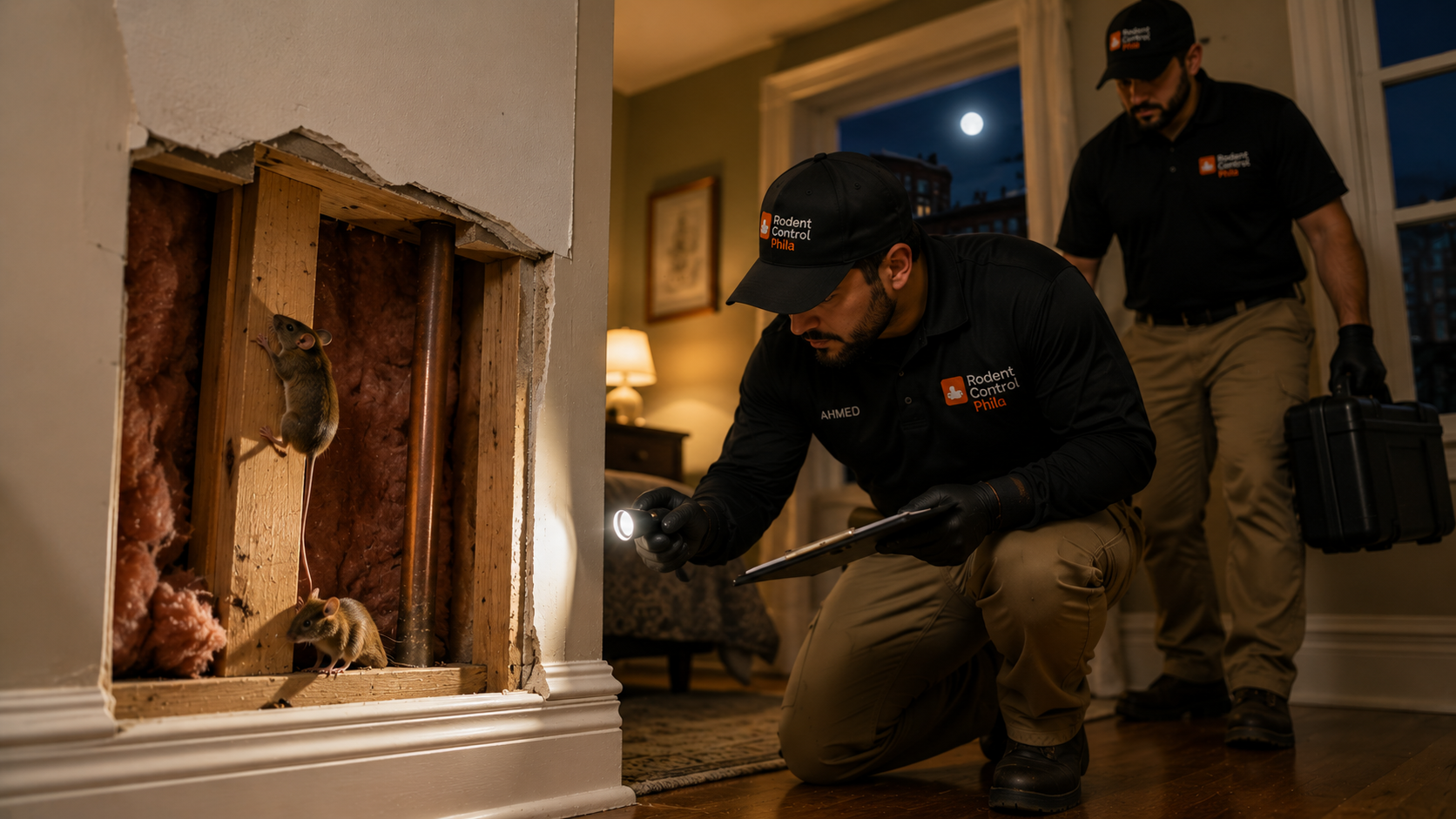
The five-step rodent control process we use in every South Philly job starts with inspection and mapping the mouse travel path inside the wall, using droppings, gnaw marks, grease trails, and thermal or moisture clues. Traps then go directly on that path, usually inside base cabinets, behind appliances, or in basement access points that reach the wall cavity. Once activity stops, exclusion work seals the entry point they were using (party wall gaps, chase penetrations, or foundation cracks) with materials mice cannot chew through. A follow-up visit confirms the wall is quiet before the job is closed. Cutting drywall is rarely needed if the inspection is done properly.
What not to do while you wait
Do not put rodenticide inside the wall or behind an appliance. A mouse that dies inside a South Philly party wall creates an odor problem that can last two to three weeks and is difficult to remove without opening the wall. Do not seal a hole shut before trapping is done either, because trapping mice inside a sealed wall creates the same odor problem. Trap first, confirm the wall is clear, then seal.
Hearing mice in your walls?
Free inspection in South Philly, flat quote before any work is scheduled.
Call (267) 501-1576 Or request your free rodent inspection onlineFrequently asked questions
How long can mice live inside a wall?+
A single mouse lives about a year, but a wall nest keeps producing new litters every few weeks, so the population inside a wall can be continuous for as long as food, water, and entry access exist. That is why the fix has to include sealing the entry point, not just trapping.
Do I need to open the wall to get mice out?+
Rarely. A proper inspection can identify travel paths and entry points without cutting drywall in almost all cases. Wall opening is only needed if there is confirmed dead-mouse odor in a specific spot or if extensive nesting damage needs to be removed.
Will mice in the wall come out into the rest of the house?+
Yes. Wall mice regularly come out at night to feed in kitchens, pantries, and under-sink cabinets, then return to the wall to nest. That travel pattern is why you often see droppings on countertops or in cabinets even when the noise seems to stay in the wall.
Can mice in my wall cross over from my neighbor's house?+
In South Philly rowhomes, yes. Party walls often have gaps at the top, bottom, or around shared plumbing chases that let mice pass between units without going outside. If a neighbor has an active infestation, coordinating treatment between units gives a much better long-term outcome.
How fast can wall mice be removed?+
Most South Philly wall-mouse jobs resolve in two to three visits over two to three weeks. The first visit sets traps on the identified path, the second confirms activity has stopped, and the final visit seals the entry point and confirms the wall is quiet.
This guide describes typical wall-mouse situations in South Philadelphia rowhomes. Every property is different. Call (267) 501-1576 for a free inspection and a specific plan for your address.