Rodent Control in Port Richmond, PA: Common Problem Areas
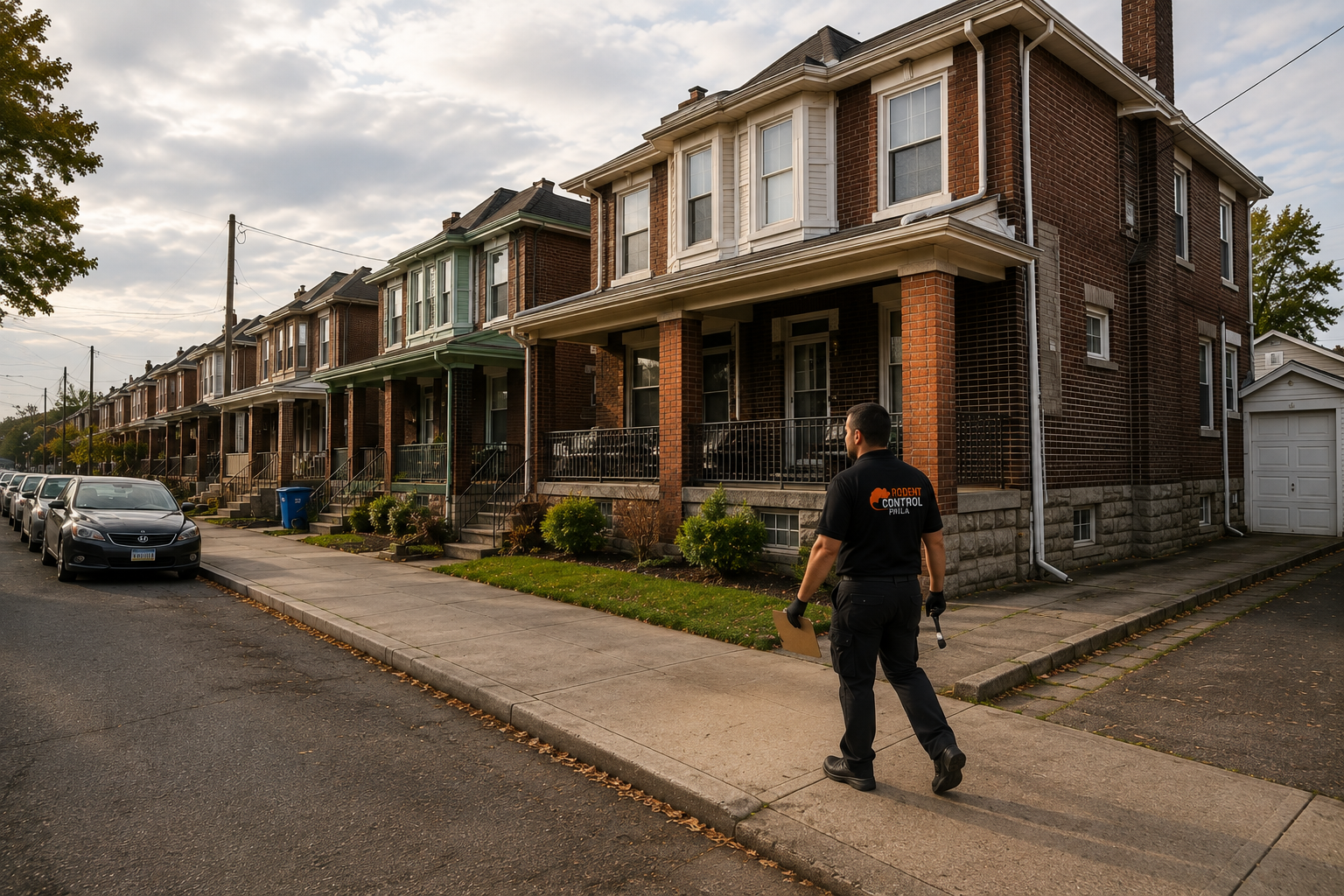
Rodent activity in Port Richmond concentrates in three predictable places: detached rear garages that sit unused most of the week, older twin and rowhome basements with unsealed pipe penetrations, and back alleys along Aramingo, Allegheny, and Richmond that collect food waste from homes and small businesses. Effective treatment here means inspecting all three zones, not just the interior, and sealing the routes rodents use to move between the garage, yard, and house.
Port Richmond has a housing mix that sets it apart from neighboring Fishtown and Kensington. Alongside the classic rowhomes, the neighborhood has a large number of twin houses (semi-detached pairs) and detached rear garages behind many properties. That mix changes where rodents nest and how they move around a property, which changes how the treatment has to be laid out. Here is what we see most often on Port Richmond service calls.
Why Port Richmond gets rodent problems
Three things drive the pattern in Port Richmond. First, the age of the housing stock. Most homes here were built between 1900 and 1930, and the original masonry foundations, cast-iron drain stacks, and lath-and-plaster construction leave dozens of small entry gaps a century later. Second, the detached garages. A lot of Port Richmond properties have a separate rear garage, and these garages sit unused for long stretches, especially in colder months, giving rodents a quiet, insulated space to nest. Third, waterfront and industrial proximity. Port Richmond backs onto the Delaware River, I-95, and old industrial corridors, all of which support larger baseline rodent populations that put steady pressure on residential blocks.
The three problem zones on a typical Port Richmond property
Where rodent activity concentrates most often:
- Detached rear garages: stored yard tools, holiday decorations, and pet food attract mice; gaps around the garage door and side vents let them in
- Basements: unsealed pipe penetrations, coal-chute openings, and cracked mortar around the foundation are common entry points
- Rear alleys and shared yards: trash bins and pet waste concentrate food supply for the block-wide rat population
- Twin-house shared walls: less exposure than a rowhome (one shared wall instead of two), but still a travel route from a neighboring unit
- Front pavement vault covers and old cellar hatches: often overlooked but a reliable rat entry from the street side
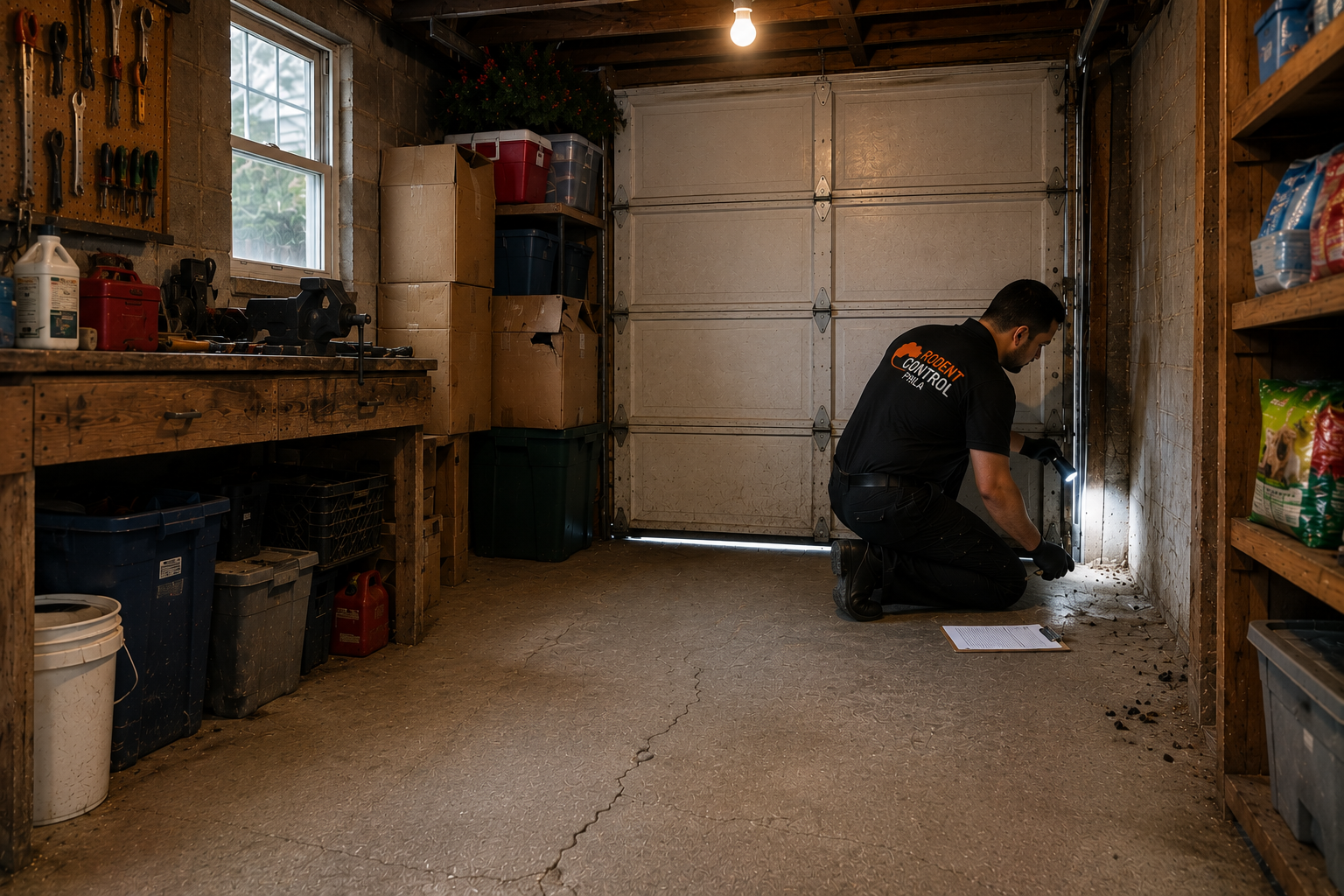
Detached garages: the most overlooked problem area
Port Richmond garages get more rodent activity than most homeowners realize, mainly because they are quiet, contain stored items that provide nesting material, and often have door seals that have degraded over the years. Mice nest in stored boxes, holiday decoration bins, and under workbenches. Rats burrow along the exterior foundation of the garage where it meets the concrete driveway or yard. When mice or rats are found inside the main house, the garage is worth inspecting on the same visit, because it is often the source rather than a separate problem.
Twin houses vs rowhomes: the treatment difference
Port Richmond has both, and the treatment approach shifts based on which one you own. Rowhomes share walls with a neighbor on both sides, meaning two potential paths for mice to arrive through a party wall. Twin houses share only one wall, cutting that route in half. However, twin houses often have exposed side walls with more direct exterior entry points (vents, siding gaps, older bay window trim) that rowhomes do not have. Neither is inherently worse; the entry-point map is just different. Our full breakdown of why Philadelphia rowhomes get mice covers the shared-wall side in detail, and the same principles apply to the shared wall on a twin.
Basement penetrations: where most Port Richmond calls start
The single most common Port Richmond rodent entry point we seal is in the basement, around water, gas, or drain-stack penetrations through the foundation wall. Original cast-iron plumbing, over a century of settling, and past renovations have left small gaps that mice and small rats slip through. Coal-chute openings that were closed off cosmetically but not properly sealed are another common one. The five-step rodent control process we use starts with a full basement inspection because most Port Richmond entry points live there.
Rental and multi-unit properties in Port Richmond
Port Richmond has a mix of owner-occupied homes and converted rental units, and rodent problems in a rental almost always involve both landlord and tenant. If you are a tenant, document activity with photos and dates and notify your landlord in writing before scheduling anything yourself. If you are a landlord or property manager, we handle single homes, twins, and small multi-unit Port Richmond buildings with written documentation suitable for tenants, insurers, and L&I follow-up.
Our Port Richmond service area
We service every block in Port Richmond (primarily ZIP 19134, with parts of 19125) and adjacent Bridesburg, Fishtown, and lower Kensington, including the corridors along Aramingo Avenue, Allegheny Avenue, Richmond Street, Lehigh Avenue, and Girard Avenue. Same-day inspections are usually available for Port Richmond addresses.
Rodent problem in Port Richmond?
Free inspection, flat quote, and same-day service across 19134.
Call (267) 501-1576 Or request your free rodent inspection onlineFrequently asked questions
Do you offer same-day rodent control in Port Richmond?+
Yes, in most cases. Port Richmond is inside our core service area, and same-day inspections are typically available for calls placed before mid-afternoon on weekdays. Call (267) 501-1576 to confirm today's availability.
Why does my Port Richmond garage keep getting mice?+
Detached garages are quiet, contain stored items rodents can nest in, and usually have degraded door seals and side vent gaps that let mice in easily. Once inside, they nest in boxes, insulation, and under workbenches. The fix is to seal the garage door bottom, side vents, and any wall penetrations, plus clearing out or storing susceptible items in sealed plastic bins.
Are twin houses less prone to mice than rowhomes?+
Slightly, since a twin shares only one wall instead of two. But twins have more exposed exterior wall surface, which creates its own entry points around siding, vents, and older window trim. The net result is similar overall risk, just from different sources.
How much does rodent control cost in Port Richmond?+
Pricing is based on property size and infestation severity, not neighborhood. Port Richmond addresses pay the same flat-quoted rates as the rest of our Philadelphia service area. A free inspection determines the specific quote before any work is scheduled.
Do you inspect detached garages as part of the visit?+
Yes, always for Port Richmond addresses. Garages are one of the most common source areas here, so a full inspection includes the garage interior, garage foundation exterior, and the path between garage and house.
This guide reflects typical rodent control situations in Port Richmond, Philadelphia (ZIP 19134). Every property is different. Call (267) 501-1576 for a free inspection and a specific plan for your address.