Rodent Exclusion vs Extermination: Which Does Your Philadelphia Home Need?
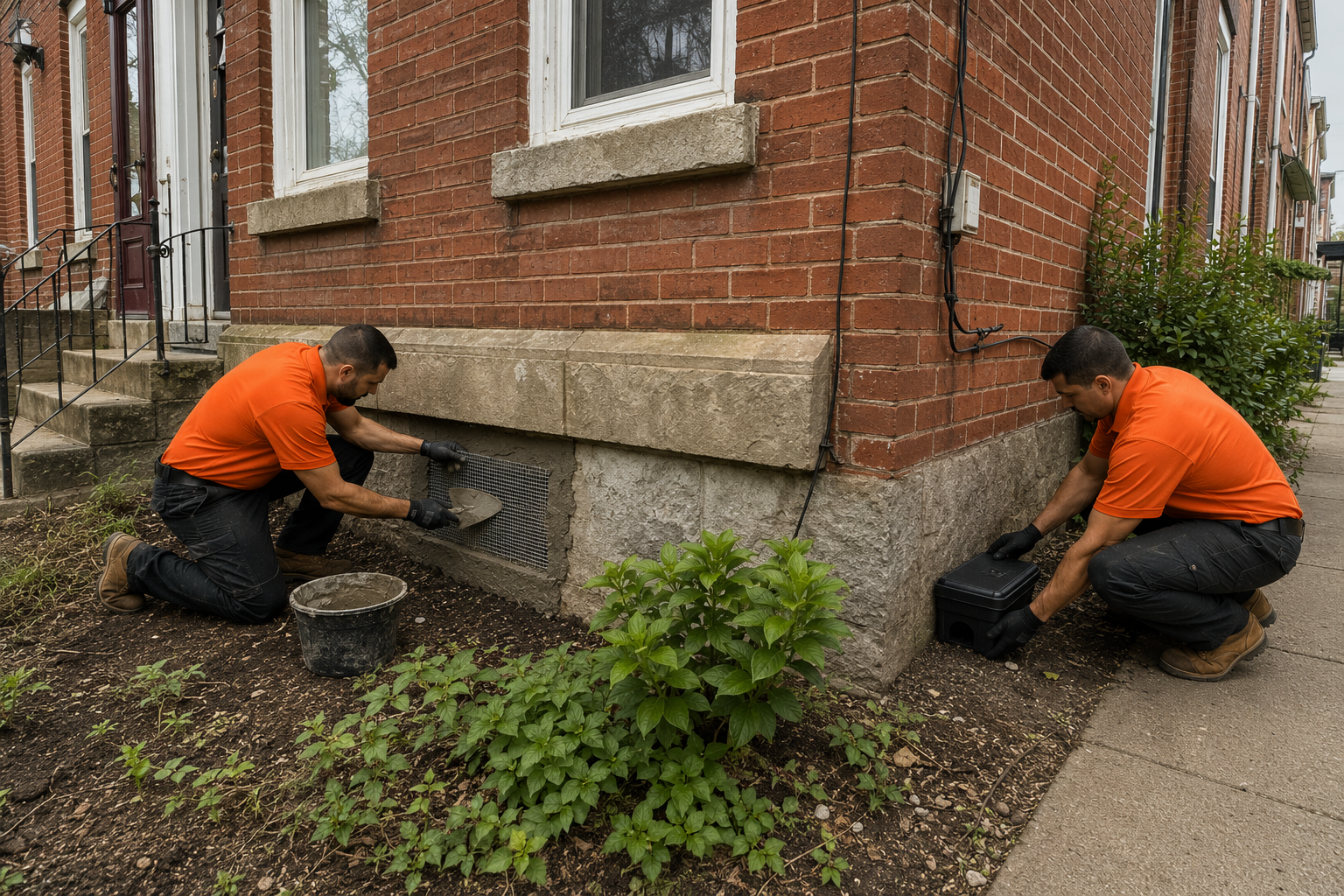
Extermination removes the rodents currently inside your Philadelphia home, using traps, bait, or professional trapping. Exclusion is the physical work of sealing entry points so new rodents cannot get in. Most homes need both. Extermination alone means the rodents come back within weeks because the entry points are still open. Exclusion alone means the rodents already inside stay inside. The reliable long-term result comes from doing both, in the right order: exterminate first, then exclude, then verify no new activity.
The two terms defined
The process of removing rodents currently living in or on a property using traps, baits, or other lethal or removal methods. Handles the active infestation.
The physical work of sealing gaps, holes, and structural entry points so rodents cannot enter (or re-enter) the property. Handles the underlying cause.
These two functions solve different problems, and each one on its own leaves the other problem unsolved. Extermination without exclusion is a temporary fix; exclusion without extermination traps rodents inside. A complete rodent control program does both, sequenced correctly.
Head-to-head: exclusion vs extermination
| Feature | Extermination | Exclusion |
|---|---|---|
| Purpose | Remove rodents currently present | Prevent rodents from entering |
| Methods used | Snap traps, tamper-resistant bait stations, professional trapping | Galvanized mesh, hydraulic cement, sheet metal, door sweeps, chimney caps |
| Timeframe | Days to a few weeks for active infestation | 1 to 3 visits for structural sealing |
| How long results last | Temporary if entry points remain open | Long-term (years) if properly done |
| When you need it | Any active rodent activity (sightings, droppings, noise) | Any history of activity, or preventive rodent-proofing |
| What it does NOT do | Does not prevent new rodents from entering | Does not remove rodents already inside |
| Sequence in a plan | First: remove what is inside | Second: seal so new ones cannot enter |
What extermination actually involves
Extermination is the active-treatment side of rodent control. For a Philadelphia home with visible rodent activity (droppings, sightings, noise in walls), extermination is the first step because the animals already inside will keep breeding, contaminating, and causing damage until they are removed. Standard extermination uses professionally placed snap traps in protected interior locations, tamper-resistant locked bait stations on the exterior perimeter, and targeted trapping in known travel paths. Our rat control and mice control services focus on this side of the work.
Extermination timelines depend on infestation size:
Typical extermination timelines for Philadelphia homes:
- Light activity (1 to 3 mice, no rats): usually resolved in 1 to 2 weeks with proper trap placement
- Moderate activity (established mouse population, or a small rat problem): 2 to 4 weeks with follow-up visits
- Heavy activity (widespread mouse infestation or established rat colony): 4 to 8 weeks with a structured multi-visit plan
- Emergency situations (business, food area, health concern): same-day and next-day response with intensive initial visits
Without exclusion, the activity almost always returns after treatment ends, typically within 4 to 12 weeks depending on neighborhood pressure and season.
What exclusion actually involves
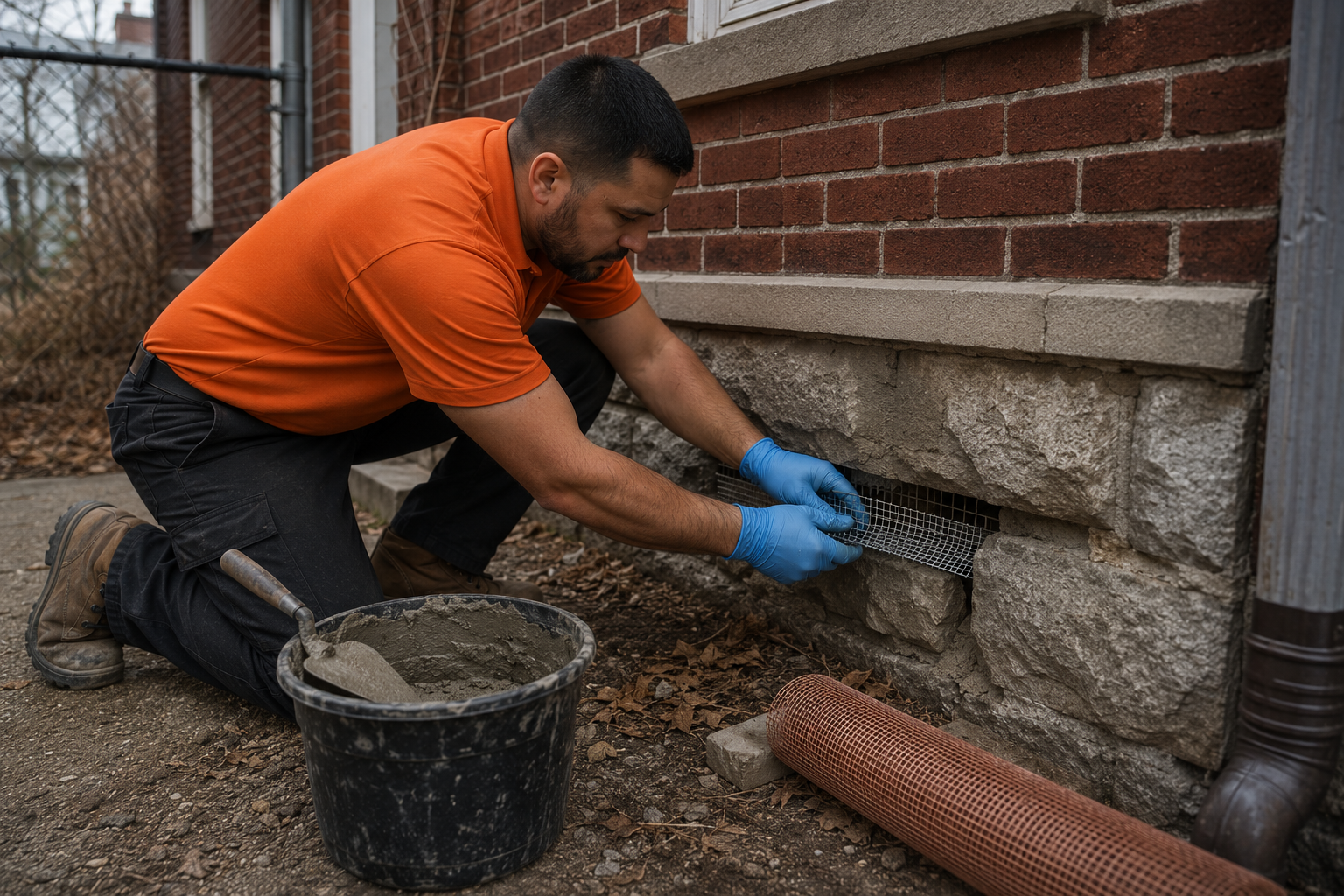
Exclusion is the structural side of rodent control. It means physically sealing every point through which a rodent could enter the building, using materials rodents cannot chew through. The work covers foundation gaps, basement window wells, utility penetrations, door sweeps, gaps around plumbing and HVAC, roofline access points, chimney tops, and any other opening larger than a quarter inch (mouse-sized) or a half inch (rat-sized).
Common exclusion materials used in Philadelphia rowhomes and singles include galvanized wire mesh, copper mesh stuffed into irregular gaps, hydraulic cement for foundation and mortar work, sheet metal for larger openings and door bottoms, door sweeps, and chimney caps. Our full walkthrough on how to rodent-proof your Philadelphia basement covers the specific materials and techniques for the highest-priority entry points.
Why doing only one leaves the problem unsolved
Extermination-only outcome
You call for treatment because you saw a mouse. A technician traps and removes several mice over two weeks. Activity stops. Six weeks later, you see a mouse again. This is the extermination-only cycle: the entry points that let the first rodents in are still open, and the neighborhood rodent population (which does not disappear) sends new individuals through those same gaps. Homes on this cycle often call for pest control every fall and every spring, indefinitely.
Exclusion-only outcome
You seal every gap you can find on your Philadelphia home before winter. Two weeks later, you hear scratching in the walls. The rodents that were already inside when you sealed the entry points are now trapped, stressed, and looking for new ways to exit, which often means chewing through drywall into living spaces. Exclusion done without first removing existing indoor rodents makes the immediate problem worse.
Combined outcome
The reliable approach is extermination first (usually 1 to 4 weeks depending on severity), then exclusion (1 to 3 visits depending on the home), then a verification period (2 to 4 weeks with monitoring) to confirm no new activity. This sequence eliminates the current infestation and prevents the next one, and it is what most professional programs deliver.
When you might need only one
Extermination only
Rare in Philadelphia, but occasionally appropriate for a one-time isolated incident (a single mouse entering through an accidental door left open, or a rodent brought in with an infested delivery) where the building itself is otherwise well-sealed. Also common for renters where the landlord will not authorize structural work but treatment is needed for habitability.
Exclusion only
Appropriate as preventive rodent-proofing when no active infestation exists, such as before winter for a home in a rodent-active neighborhood, before renting out a property, or after buying a home with known pest history in the area. Also appropriate after completed extermination as the sealing follow-up.
Cost differences
Extermination is usually priced per visit or as a package for a treatment cycle. Exclusion is priced by the scope of the sealing work, which depends on building size, number of entry points, and material requirements. Combined programs are typically the most cost-effective per year because they resolve the underlying issue rather than requiring recurring treatment. Our rodent control cost guide covers the specific pricing structure and what drives it.
What we recommend for most Philadelphia homes
For any home with current rodent activity: extermination first, then exclusion, then monitoring. For a home with no current activity but a history or high neighborhood pressure: exclusion first as preventive rodent-proofing, then monitoring. For rentals and landlord situations: extermination is almost always the tenant-facing immediate need; exclusion is the landlord-facing longer-term fix that prevents the next call. Our full rodent control process describes exactly how the combined approach runs from inspection to verification.
Not sure which your home needs?
Free inspection tells you exactly what is active and what needs sealing, with a combined quote.
Call (267) 501-1576 Or request your free rodent inspection onlineFrequently asked questions
What is the difference between rodent exclusion and extermination?+
Extermination removes rodents that are currently inside a property using traps, bait, or trapping. Exclusion is the physical sealing of entry points so rodents cannot enter or re-enter. Extermination handles the immediate problem; exclusion prevents the next one. Most homes need both.
Do I really need exclusion if extermination worked?+
Yes, in almost every Philadelphia home. Extermination without exclusion means the entry points that let the first rodents in are still open, and new rodents from the neighborhood population will use those same gaps. Homes that skip exclusion typically see rodent activity return within 4 to 12 weeks and end up calling for treatment repeatedly.
Can I do exclusion without extermination first?+
Only if you are confident no rodents are currently inside. If you seal entry points while rodents are living in the walls or basement, they become trapped and often chew into living areas trying to escape. Preventive exclusion before winter (when no activity is present) is fine; sealing during active infestation is not.
How long does exclusion last?+
Properly done exclusion with correct materials (galvanized mesh, hydraulic cement, sheet metal) typically lasts many years. It can be compromised by later structural changes (new utility penetrations, foundation settling, damaged door sweeps), so periodic inspection every few years is worth the low cost.
Which is more expensive, extermination or exclusion?+
Depends on the scope. A single extermination visit is often cheaper than a full exclusion job upfront. However, extermination without exclusion typically means recurring visits every season or two, so the annual cost adds up. Combined programs are usually the most cost-effective over a two-to-three-year period.
This guide describes how rodent exclusion and extermination typically work for Philadelphia homes. Every property is different and the right combination depends on the specific situation. Call (267) 501-1576 for a free inspection and a specific plan.