Rodent Control in Manayunk & Roxborough, Philadelphia
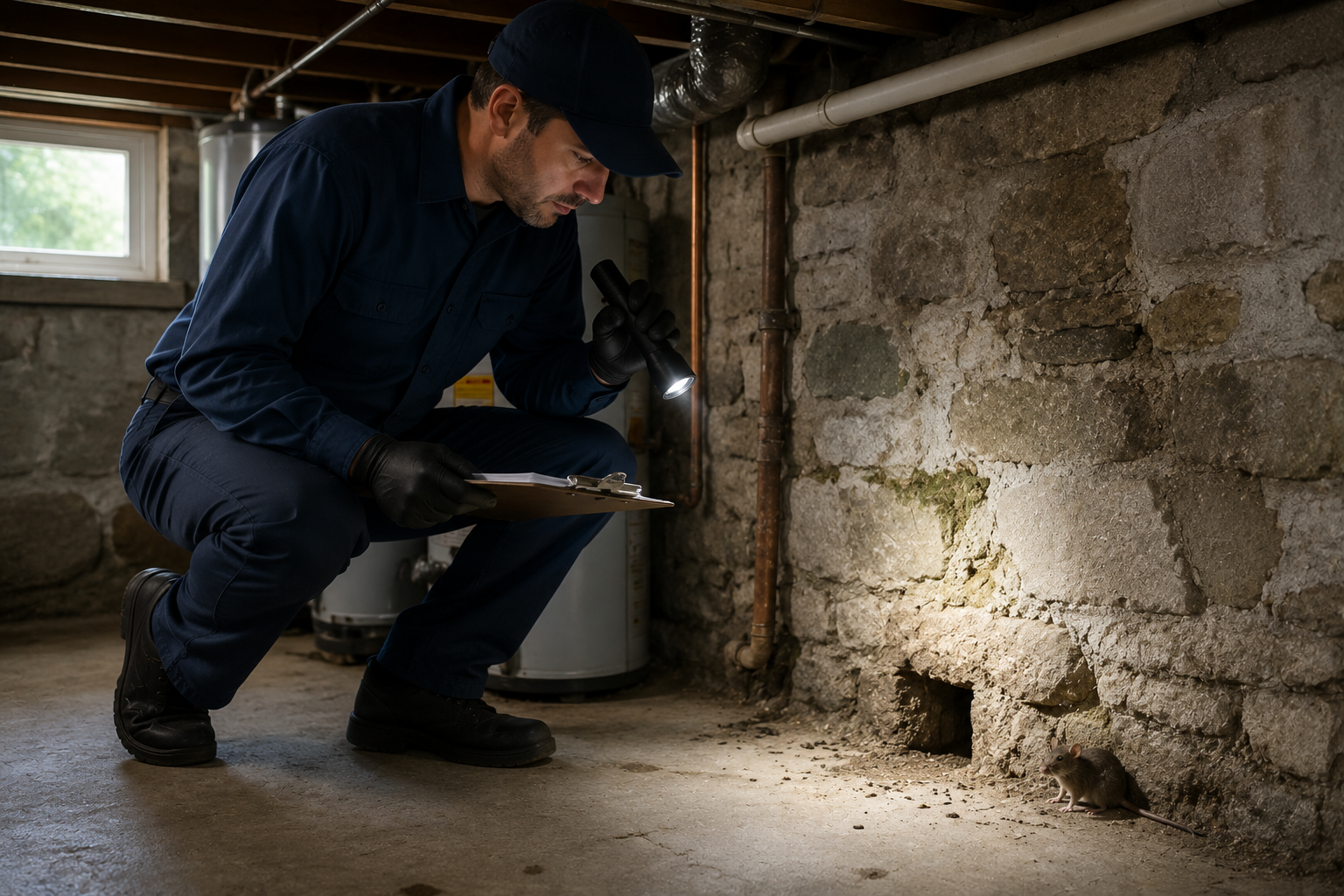
Rodent control in Manayunk and Roxborough works differently than in flatter Philadelphia neighborhoods because of the terrain. Homes stepped into hillside slopes create irregular basement grade lines, exposed foundation walls on the downhill side, and retaining walls with drainage gaps that rats burrow into. The proximity to the Schuylkill River and Wissahickon Valley Park also adds a baseline of outdoor rodent pressure from wooded and riverfront areas. Effective treatment here means inspecting hillside foundation exposure and adjacent yard grade in addition to the standard interior work.
Manayunk and Roxborough sit on some of the steepest residential terrain in Philadelphia, and that terrain shapes the rodent problems homeowners see. Rowhomes stepped up hillsides, retaining walls holding back yards, wooded ravines behind properties, and river-adjacent flat areas at the bottom all create conditions rodents exploit in specific ways. Here is what we see most often on Manayunk and Roxborough service calls.
Why terrain matters for Manayunk and Roxborough rodent problems
Three terrain features drive the local pattern. First, hillside grade. Many homes have foundation walls that are fully underground on the uphill side but partially or fully exposed on the downhill side, creating grade-level entry points that flatter neighborhoods do not have. Second, retaining walls. Stone and concrete retaining walls holding back yards or supporting driveways develop drainage gaps and mortar cracks over time, and rats burrow into these gaps to nest with easy shelter from weather. Third, proximity to wooded and riverfront areas. Wissahickon Valley Park to the west and the Schuylkill River to the south support baseline outdoor rodent populations that put pressure on adjacent residential blocks, particularly in fall as those populations move toward warmer indoor shelter.
Common rodent entry points in Manayunk and Roxborough homes
The Manayunk and Roxborough properties we service most often have rodents entering through:
- Downhill-side foundation walls with above-grade exposure and unsealed penetrations
- Retaining wall drainage gaps and cracked mortar joints (a hillside-specific issue)
- Rear yard grade where retaining walls meet the natural slope
- Basement window wells on the downhill side that fill with leaves and debris
- Attic and roofline gaps accessible via mature tree branches touching the house
- Detached garages, sheds, and outbuildings on hillside lots
- Old coal-chute openings on pre-1930 homes
- Foundation cracks from hillside settling and hydrostatic pressure
Sealing these requires materials rats and mice cannot chew through, and hillside-adjacent work often needs additional attention to drainage so the sealed materials do not fail from water pressure. Our full guide on how to rodent-proof a Philadelphia basement covers the general approach; hillside properties often need professional exclusion work that accounts for the terrain and drainage.
Attic and upper-floor mice: a common Manayunk pattern
Manayunk and Roxborough homeowners see more attic and upper-floor mouse activity than the citywide average, largely because mature tree canopy in the neighborhood gives mice and squirrels roof access that flatter urban neighborhoods do not have. Branches touching or overhanging the roof are the most common entry route for attic infestations here. Signs include scratching in the ceiling at dawn and dusk (squirrels), light scratching at night (mice), or droppings appearing on top of stored attic boxes. Trimming branches back at least six feet from the house eliminates most of this access.
Yard burrows on hillside lots
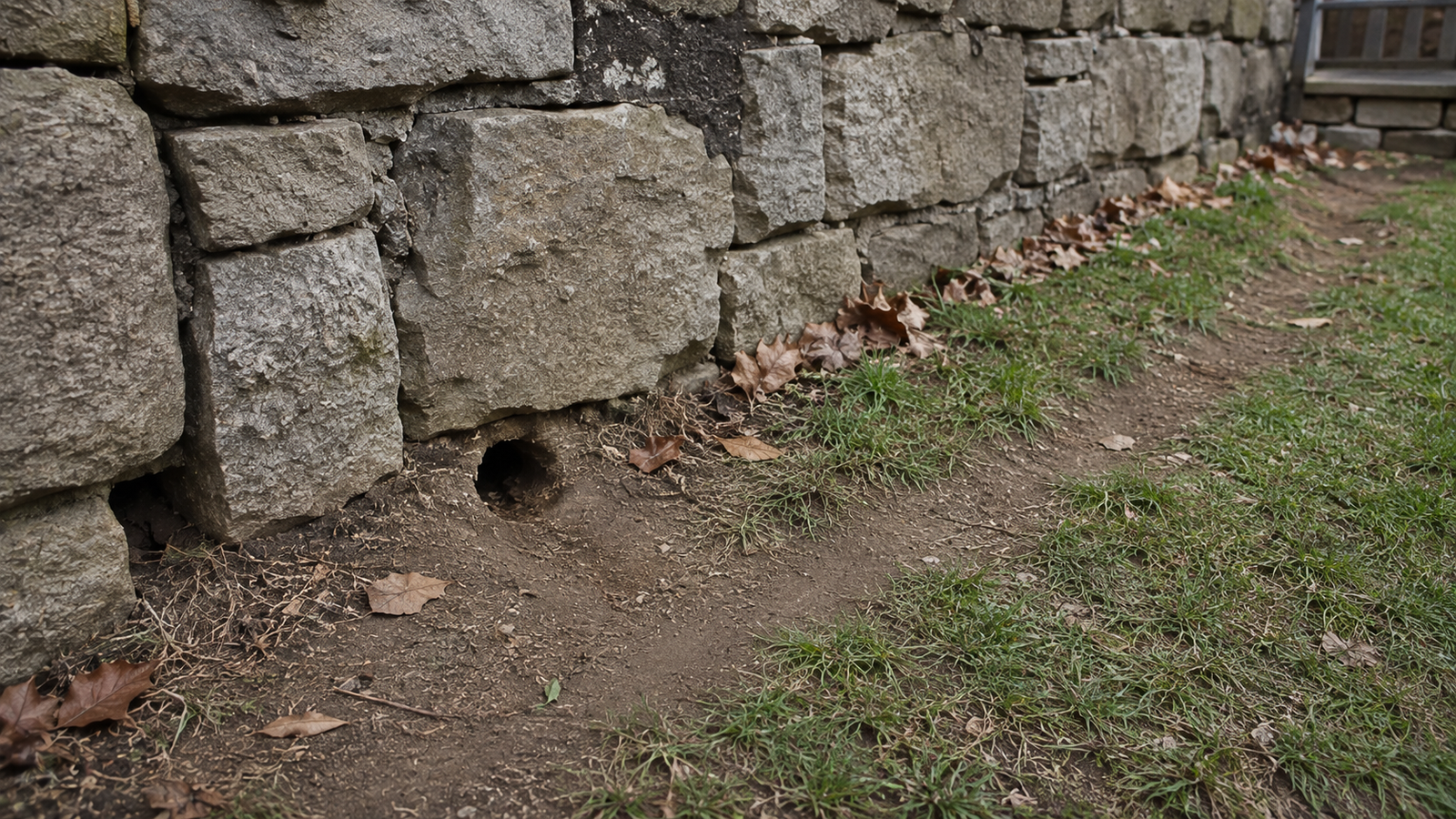
Rat burrows in Manayunk and Roxborough yards often show up in specific hillside locations: at the base of retaining walls, along the downhill side of the property, under decks or stairs built into the slope, and in the transition zone where landscaping meets the natural grade. These locations combine soft dirt for burrowing with protective cover from the wall or deck above. Our guide on identifying rat holes in a Philadelphia yard covers how to tell if a burrow is active and what to do next.
Rentals, multi-unit conversions, and duplex twins
Manayunk has a large rental market, particularly around Main Street, with many older homes converted into duplex and triplex units. Rodent problems in these properties almost always involve both landlord and tenant coordination. If you are a tenant, document activity with photos, dates, and specific locations, and notify your landlord in writing before scheduling anything yourself. If you are a landlord or property manager, we handle single homes, twins, and small multi-unit Manayunk and Roxborough buildings with written documentation suitable for tenants, insurers, and L&I follow-up.
Our Manayunk and Roxborough service area
We service every block in Manayunk (ZIP 19127) and Roxborough (ZIP 19128), including the corridors along Main Street, Ridge Avenue, Umbria Street, Henry Avenue, and Domino Lane, and the adjacent parts of East Falls, Wissahickon, and Andorra. Same-day inspections are usually available for Manayunk and Roxborough addresses.
Rodent problem in Manayunk or Roxborough?
Free inspection, flat quote, and same-day service across 19127 and 19128.
Call (267) 501-1576 Or request your free rodent inspection onlineFrequently asked questions
Do you offer same-day rodent control in Manayunk and Roxborough?+
Yes, in most cases. Manayunk and Roxborough are inside our core service area, and same-day inspections are typically available for calls placed before mid-afternoon on weekdays. Call (267) 501-1576 to confirm today's availability.
Why do hillside homes get more rat burrows?+
Retaining walls and grade transitions create drainage gaps, mortar cracks, and protected soft-dirt zones that rats prefer for burrowing. The wall above provides shelter from weather, and the drainage voids inside older retaining walls give access to insulated interior space. Flat lots do not have these same combined-shelter features at the same density.
Are attic mice more common in Manayunk than in South Philly?+
Yes, largely because Manayunk and Roxborough have significantly more mature tree canopy, which gives mice and squirrels roof access via branches. Attic entry through the roofline is one of the most common patterns we see here, while flatter urban neighborhoods with less canopy see more foundation-level entry.
Does living near Wissahickon Valley Park mean more rodents?+
Slightly, because the park supports outdoor wildlife populations including rodents that then put pressure on adjacent residential blocks. This is most noticeable in fall as outdoor food supply drops. Structural exclusion (sealing entry points) on the house is the main defense; the park is not going anywhere.
Do you work with Manayunk landlords and Main Street rental buildings?+
Yes. We handle single homes, twins, converted duplexes and triplexes, and small multi-unit Manayunk and Roxborough buildings, with written documentation suitable for tenants, insurers, and L&I follow-up.
This guide reflects typical rodent control situations in Manayunk (ZIP 19127) and Roxborough (ZIP 19128), Philadelphia. Every property is different. Call (267) 501-1576 for a free inspection and a specific plan for your address.