DIY vs Professional Rodent Control in Philadelphia: What Actually Works
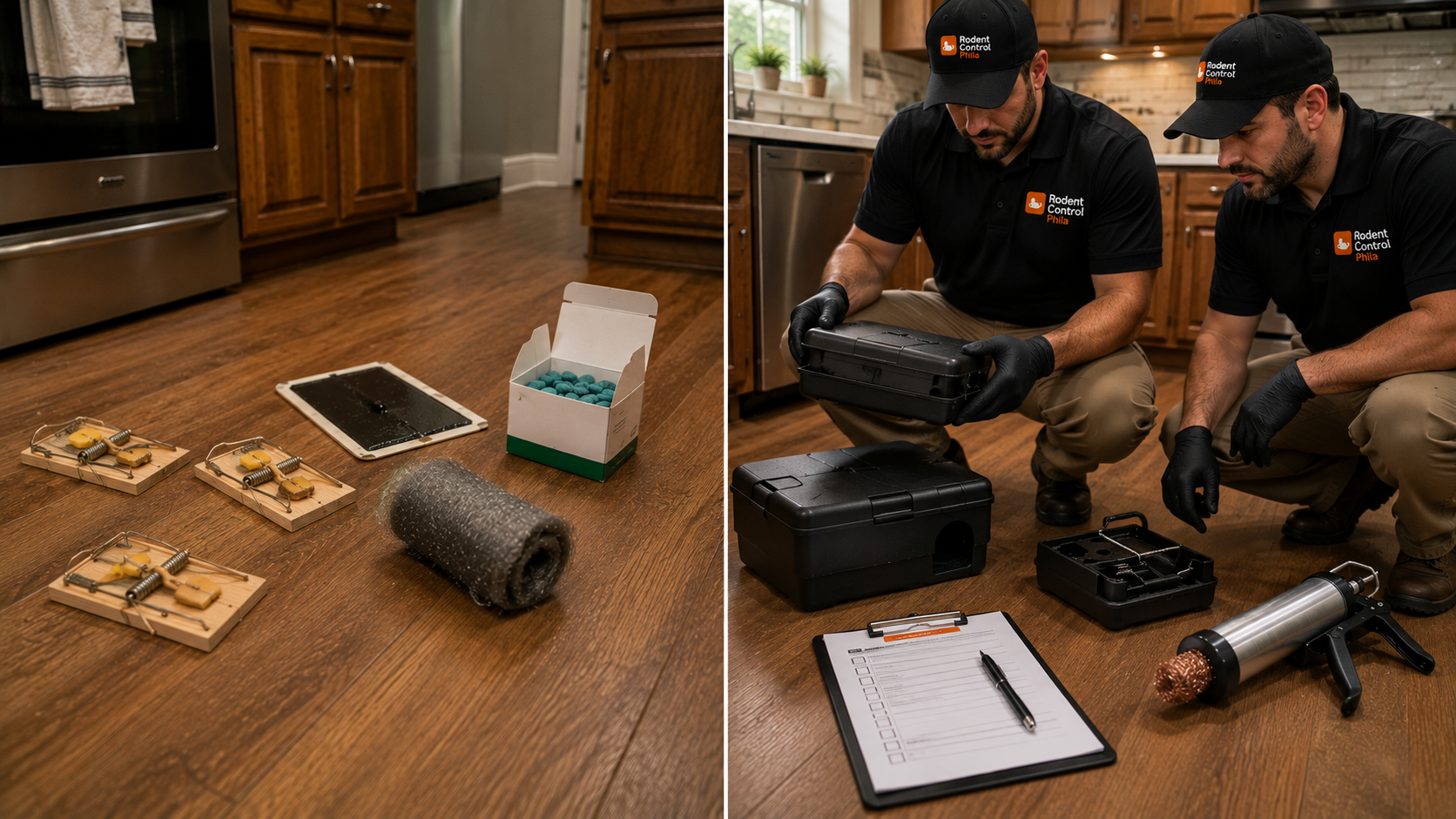
DIY rodent control works for a small, early-stage mouse problem in a single room, using snap traps and basic sealing. It usually fails against rats, wall or attic activity, and anything in a Philadelphia rowhome with shared walls, because DIY does not address the entry points rodents keep coming back through. Once you have seen droppings in more than one room or heard scratching in walls, a professional plan is faster, safer, and cheaper long-term.
Almost every Philadelphia homeowner tries DIY first. That is normal, and for a lone mouse in the kitchen it can even be the right call. The problem starts when DIY methods get stretched past what they were designed for, which is where most rowhome rodent situations end up. Here is an honest breakdown of what DIY handles well, where it breaks down, and when a professional becomes the cheaper option.
DIY vs professional: what actually works, at a glance
| DIY method | Works for | Fails when |
|---|---|---|
| Snap traps | One or two mice in a single room, caught within days | Rats (trap-shy), wall activity, or ongoing droppings after a week |
| Glue boards | Confirming activity in a specific spot | Actual control; rats and larger mice pull free, also raises humane concerns |
| Store-bought bait | Almost nothing indoors safely | Rodents die inside walls (odor), and pets or kids can access it |
| Ultrasonic repellers | Marketing claims, not measurable results | Any real infestation; rodents habituate within days |
| Steel wool / caulk sealing | One or two visible gaps under a sink or around a pipe | Rowhomes with shared walls, roofline gaps, or foundation cracks you cannot see |
| Peppermint oil / home remedies | Smell, not rodent control | Every real infestation; no evidence it repels rats or mice |
What DIY can actually handle
DIY has a real place. If you catch a single mouse in a kitchen or pantry within a day or two of noticing droppings, a few well-placed snap traps and cleaning up the food source often ends it. The signs it worked are clear: no fresh droppings for two weeks, no new gnaw marks, no night noise. If that is your situation, you probably do not need to call anyone.
Where DIY breaks down in Philadelphia rowhomes
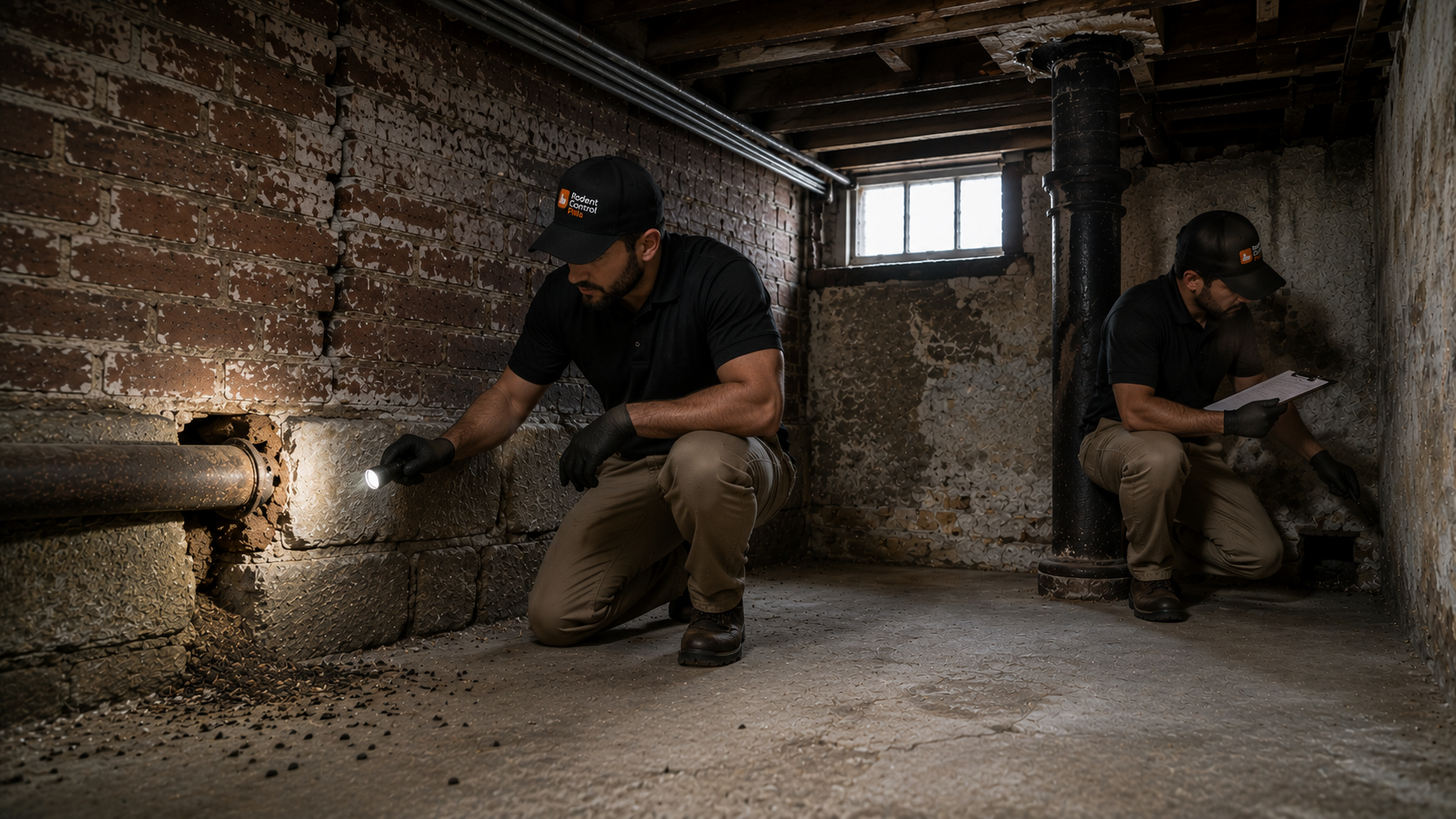
Most Philadelphia housing stock works against DIY. Rowhomes share walls, which means mice can travel between units without ever going outside, so trapping in your unit does nothing about the ones in the wall cavity next door. Older masonry, unsealed pipe penetrations in basements, and alley-facing entry points give rodents dozens of ways in, and DIY sealing rarely finds more than a fraction of them. This is why the same homeowners often retrap the same spot every few weeks for months, thinking they have new mice when they are really seeing the next wave through the same unaddressed gaps.
When DIY becomes genuinely risky
A few DIY situations move from ineffective to actually dangerous. Store-bought rodenticide inside a home with pets or young children is the most common one. Secondary poisoning is a real risk, and a rodent that dies inside a wall can create an odor problem that lasts weeks. Cleaning up droppings or nesting material without proper ventilation and PPE can also expose you to hantavirus and other pathogens, which is why professional rodent removal handles sanitation as a separate, protected step. If you are seeing droppings in more than one room, cleanup alone is a reason to bring in a pro.
Rats are a different story than mice
DIY has the worst success rate against rats specifically. Rats are neophobic, meaning they avoid new objects in their environment, including traps, for days or weeks before touching them. They also burrow, meaning the source of the problem is often outside in the yard or alley, not inside where you are placing traps. Rat control almost always requires outdoor burrow treatment plus indoor work, which is beyond what over-the-counter products are built for. If you have confirmed rats (not mice), skip the DIY phase.
Signs it is time to call a professional
Stop DIY and call a pro if any of these apply:
- You have seen droppings in more than one room, or in a room you rarely enter
- You hear scratching or scurrying inside walls, ceilings, or the attic
- You have been trapping for more than two weeks and still catching
- You have confirmed rats (larger droppings, burrows, or greasy rub marks on walls)
- You have pets or young children and are considering rodenticide
- You share walls with a neighbor who also has a rodent problem
- You are a landlord or tenant and need documentation for the other party
Why professional service usually ends up cheaper
The math on DIY looks good on the receipt. A pack of traps and some steel wool is under fifty dollars. But if the problem is bigger than a single mouse, that fifty dollars gets spent every month for six months, plus damaged food, chewed wiring, and eventually a call to a pro anyway. A professional visit that combines trapping with sealing the entry points typically closes the problem in one to three visits and holds. That is the piece DIY structurally cannot do at scale: find and seal every gap a rodent is using.
Not sure if your problem is past the DIY stage?
Get a free inspection first. If it is small, we will tell you.
Call (267) 501-1576 Or request your free rodent inspection onlineFrequently asked questions
Do DIY mouse traps actually work?+
Yes, for a small mouse problem caught early, usually one or two mice in a single room. Snap traps placed along walls where droppings are visible can end it within a few days. They stop working once the problem has spread beyond one room, involves rats, or is coming from inside shared walls.
Is store-bought rat poison safe to use at home?+
Generally no. Indoor use risks pet and child exposure, and rodents that eat bait often die inside walls, which creates a serious odor problem. Professionals use tamper-resistant bait stations in specific outdoor placements, not open bait indoors.
Why do mice keep coming back after I trap them?+
Because trapping only removes the mice already inside. It does not close the entry points they used. In Philadelphia rowhomes, those entry points are often in shared walls, basement pipe penetrations, or roofline gaps you cannot easily see or reach. New mice keep arriving through the same routes.
Do ultrasonic rodent repellers work?+
There is no reliable evidence they control an active infestation. Independent testing consistently shows rodents habituate within days and go back to normal behavior. They are not a substitute for trapping and sealing.
How long should I try DIY before calling a professional?+
If you are still catching mice or seeing fresh droppings after two weeks of consistent DIY trapping, the problem is bigger than DIY can solve. For rats specifically, skip the DIY phase. Rats rarely respond to store-bought traps and usually require professional exclusion work.
This guide compares typical DIY and professional rodent control outcomes in Philadelphia homes. Every property is different. Call (267) 501-1576 for a free inspection and a specific recommendation for your situation.