What Does Professional Rodent Control Actually Involve?
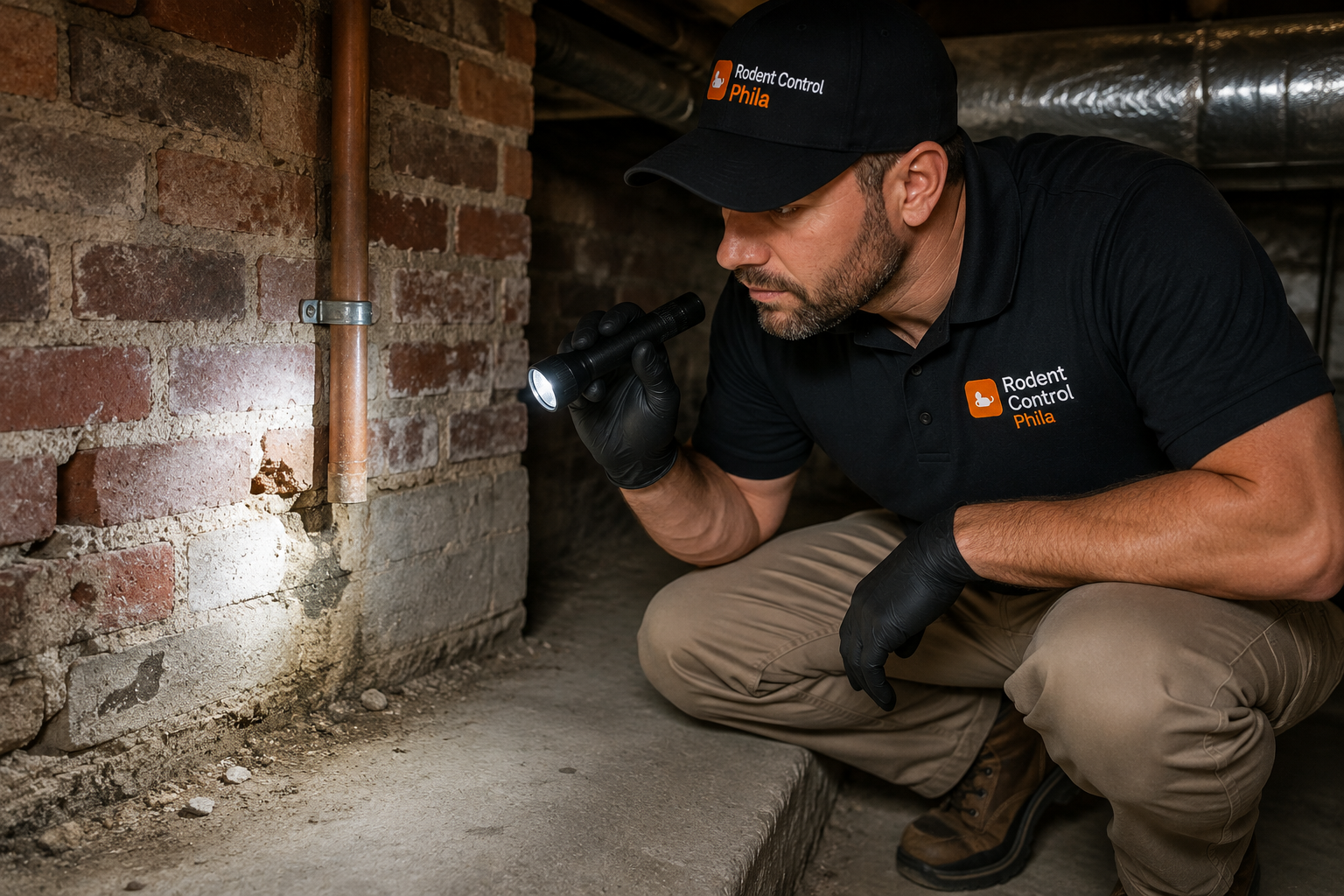
Professional rodent control usually involves five steps: a full inspection, a written treatment plan, trapping or baiting, sealing entry points (exclusion), and a follow-up visit to confirm the property is clear. Most Philadelphia jobs take one to three visits over a few weeks, depending on how far the infestation has spread.
Homeowners often picture rodent control as someone dropping off a few traps and leaving. In practice, a proper job looks more like a short project: find where rodents are getting in and living, remove them, close the gaps, and confirm the fix actually held. Here is what each part of that process looks like in Philadelphia.
The rodent control process, step by step
-
1
Full property inspection
A technician checks the interior and exterior, including basements, kitchens, attics, and any shared walls or alley-facing entry points common in Philadelphia rowhomes, and documents what they find with photos.
-
2
Written treatment plan and flat quote
Based on the inspection, you get a specific plan for your property and an upfront price, not a rough estimate that changes once work starts.
-
3
Trapping and baiting
Snap traps or tamper-resistant bait stations go in the spots rodents are actually using, based on droppings, gnaw marks, and travel paths found during the inspection, not placed at random.
-
4
Sealing entry points (exclusion)
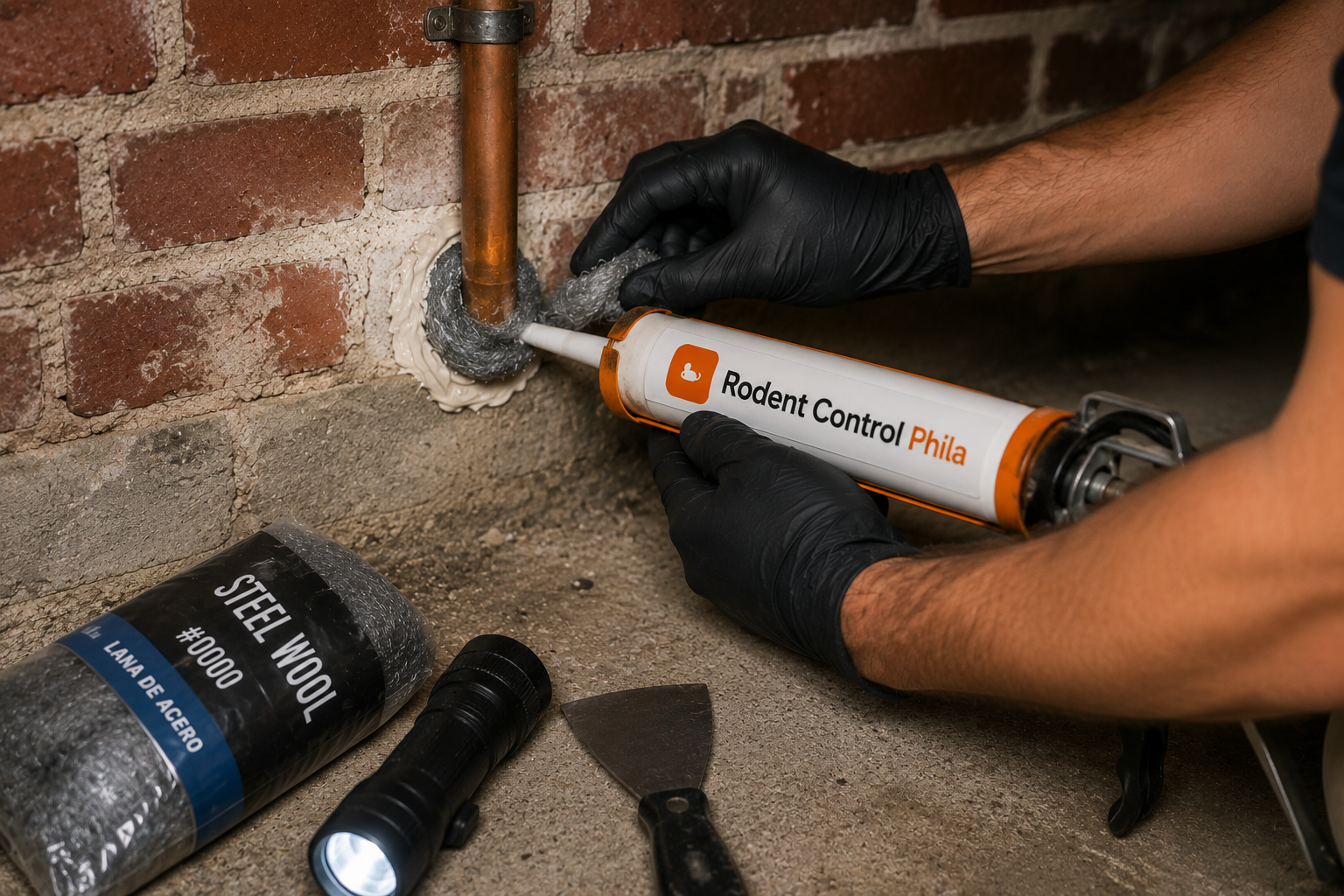
Gaps around pipes, vents, foundation cracks, and rooflines get sealed with materials rodents cannot chew through. This is the step that stops new rodents from getting in after the current ones are gone.
-
5
Follow-up visit and confirmation
A scheduled return visit checks trap activity, confirms sealing held, and verifies there are no more signs of rodents before the job is marked complete.
What the initial inspection actually covers
The inspection is the part that determines everything else, so it is worth knowing what a thorough one includes rather than a quick walk-through.
A proper Philadelphia rodent inspection typically checks:
- Basement, crawl space, and foundation for burrows or gnaw marks
- Kitchen, pantry, and utility areas for droppings or food packaging damage
- Attic and roofline for nesting material or entry gaps
- Shared walls and alley-facing doors common in rowhome construction
- Pipe, vent, and utility penetrations where rodents commonly enter
Why trapping alone is not the whole job
Trapping removes the rodents that are already inside, but it does nothing to stop the next ones from getting in through the same gaps. That is why professional rodent trapping is paired with exclusion work rather than used on its own. Skipping the sealing step is the most common reason a property sees rodents again within a few months of a trap-only visit.
How the process differs for mice versus rats
Mice control generally moves faster since mice are smaller and easier to trap, often resolving in one to two visits. Rat control tends to take longer, since rats are more cautious around new objects like traps and often require burrow treatment outdoors in addition to indoor work.
What happens if droppings or damage need cleanup
If droppings, nesting material, or odor are present, sanitation is usually handled as part of rodent removal rather than the trapping visit itself. Ask upfront whether cleanup is included in your flat quote or billed as a separate step.
What is typically NOT included in a standard visit
To avoid surprises, most standard rodent control visits do not automatically include structural repairs beyond sealing (like replacing damaged siding), full attic insulation removal and replacement, or repeat visits beyond the agreed follow-up schedule. A transparent provider will flag these as separate line items during the inspection, not add them after work has already started.
Not sure what your property needs?
Get a free inspection and a written plan before anything is scheduled.
Call (267) 501-1576 Or request your free rodent inspection onlineFrequently asked questions
How many visits does rodent control usually take?+
Most Philadelphia jobs take one to three visits over a few weeks. A light mouse problem can resolve in a single visit, while a spreading infestation with exclusion work often needs a follow-up to confirm it is fully clear.
Do I need to leave the house during treatment?+
No. Standard trapping, baiting, and sealing work does not require leaving the property. This is different from fumigation, which is rarely needed for typical rodent jobs.
Is sealing entry points really necessary, or is trapping enough?+
Trapping only removes the rodents currently inside. Without sealing the entry points they used, new rodents can move in through the same gaps within weeks, which is why most professional plans include both.
Can rodent control be done in one visit?+
Sometimes, for small mouse problems caught early. Most jobs involving rats or wider spread activity are scheduled with at least one follow-up to confirm the property stays clear.
What should I do before the technician arrives?+
Clear access to basements, attics, and under-sink cabinets, and note where you have seen droppings, gnaw marks, or heard activity. This helps the inspection move faster and gives a more accurate plan.
This guide describes a typical professional rodent control process in Philadelphia. Exact steps and timelines vary by property and infestation severity. Call (267) 501-1576 for a free inspection and a specific plan for your home or business.